Oman Vision 2040: why the government uses real estate strategically
Oman is going all-in on diversifying away from oil. Tourism and real estate are two of six priority sectors. What this concretely means for foreign buyers in Muscat and Salalah.
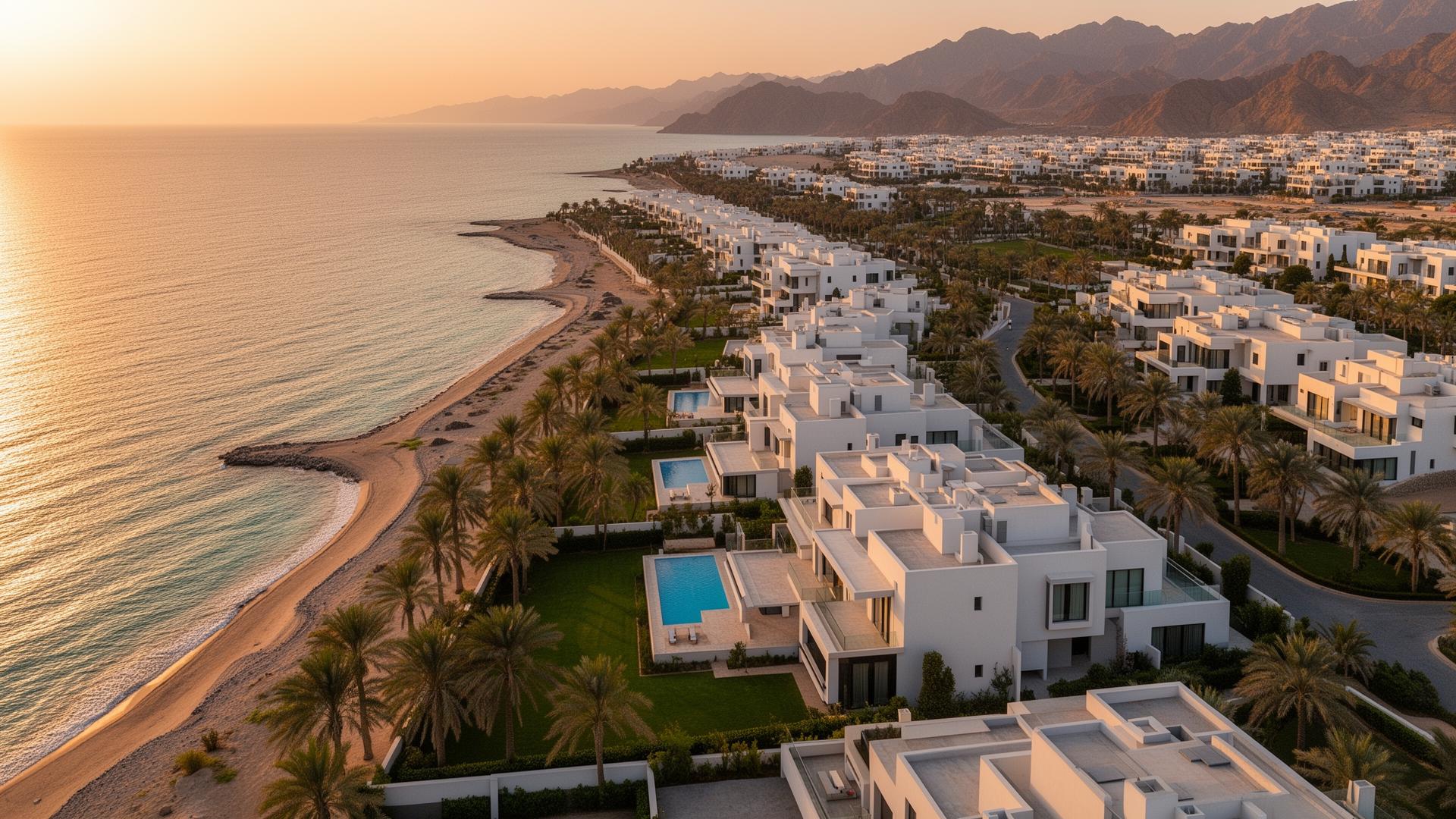
Driving through the Al Mouj or Madinat Al Irfan districts of Muscat, you can see what happens when a government literally pours its economic plan into concrete. Oman Vision 2040 is not a marketing document, it is a state policy plan that has been colouring every new permit since 2020. For foreign buyers that is relevant, because it directly determines where you can invest and what guarantees underpin your purchase.
Reducing oil dependency
In 2014 Oman still drew more than 70% of its government income from oil and gas. Vision 2040 aims to bring that share below 10%. Real estate and tourism are two of the six priority sectors meant to close that gap, alongside logistics, mining, fisheries and industry. The logic is simple: real estate attracts foreign capital, tourism generates foreign currency, and together they create permanent jobs for Omanis.
What this means for the market
Concrete effects we see daily: permit tracks for Integrated Tourism Complexes are significantly faster than ten years ago, there is a structured freehold framework for non-Omanis, and major international operators (Anantara, Kempinski, Jumeirah) have been brought to the Omani coast with government support to lift the tourism infrastructure to standard. For an investor that translates into something very practical: an apartment in Jebel Sifah or Hawana Salalah is not a plot in a vacuum — there is already a beach, a marina, an 18-hole golf course or a five-star hotel that has been operational for years. That infrastructure drives occupancy, and therefore your rental income.
Risks to take seriously
A government vision is not a guarantee. A few things we always mention in a first conversation: the Omani rial is pegged to the US dollar (3.8451 OMR per USD), so currency risk on that axis always exists. The market is also narrower than Dubai, with fewer buyers and less speed in the transaction market. And Oman remains dependent on regional stability; tensions in the Gulf region affect sentiment. Still, the direction is clear. Anyone entering now is buying in a market driven by government policy rather than restrained by it.